Renting an instance
This guide walks you through deploying a virtual machine instance on CPU Cloud. For background on marketplace concepts, instance lifecycle, and how billing works, see the CPU Cloud concepts.
When you deploy, the system reserves 2 days' rent from your account balance — one day is charged immediately upon starting the instance, the other is kept as a reserve. Make sure your balance has enough funds before starting. See billing model for details.
Steps to configure an instance
1. Choose a location
Choose one of the available data center locations.

2. Choose a configuration
Choose your instance's configuration from the available options. Compute resources come in multiples of a compute unit — 2 vCPUs and 4 GB of RAM.
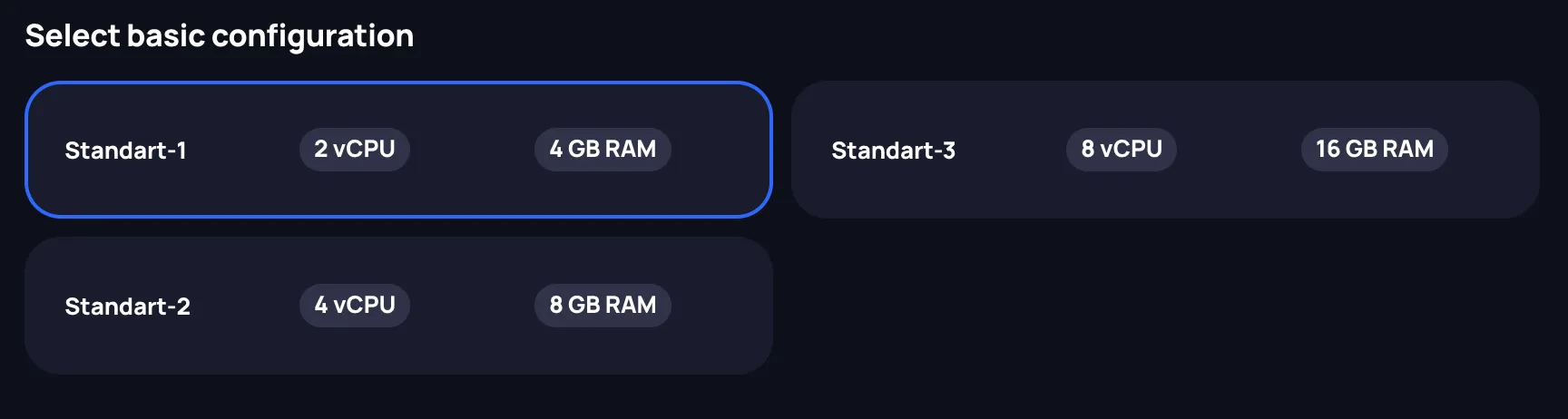
3. Choose storage
Choose the type and amount of storage. The minimum storage size is 25 GB. Currently only DAS (direct-attached storage) is available, which offers better performance than shared network solutions but does not allow dynamic resizing.

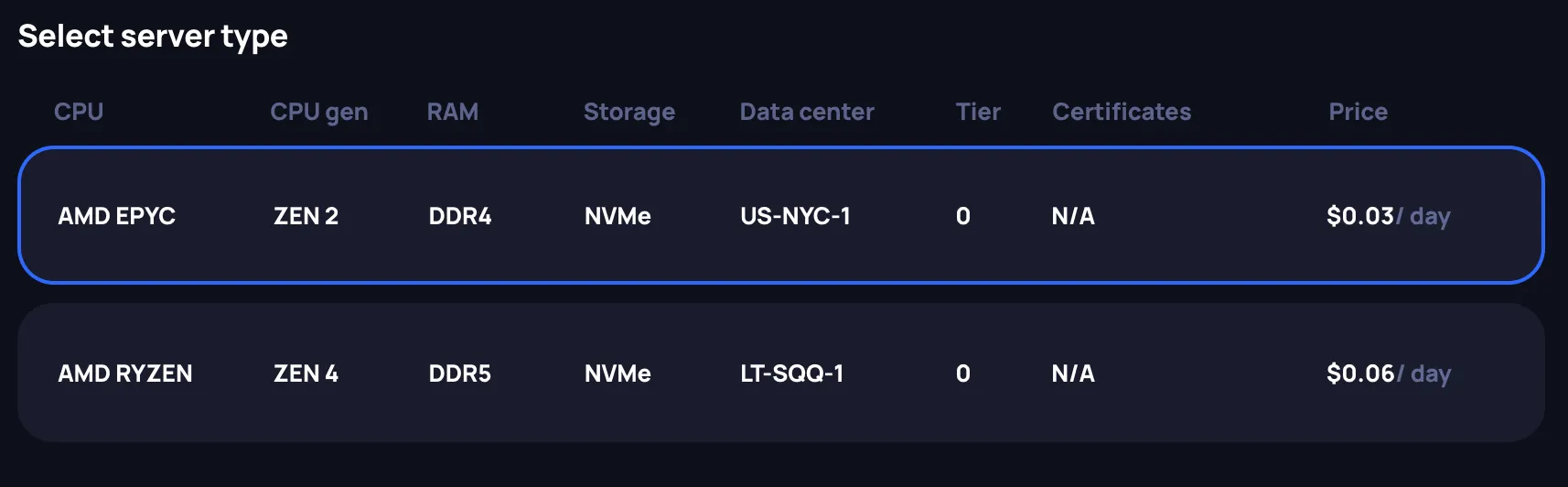
4. Choose the server type
Review the available servers for your chosen configuration. Hardware varies within and across data centers, so pay attention to the specifications and price. The console also shows each data center's location at the city level and details such as available certifications.
5. Rent a public IPv4 address
A public IPv4 address is allocated to the instance at deployment. Currently, this is the only way to access your instance via SSH.

6. Specify the instance name
Choose a name for your instance. The name must be unique within your account.

7. Specify the open ports
By default, only port 22 is open. You can assign up to 50 additional ports — all open ports support TCP and UDP.

8. Choose the OS image
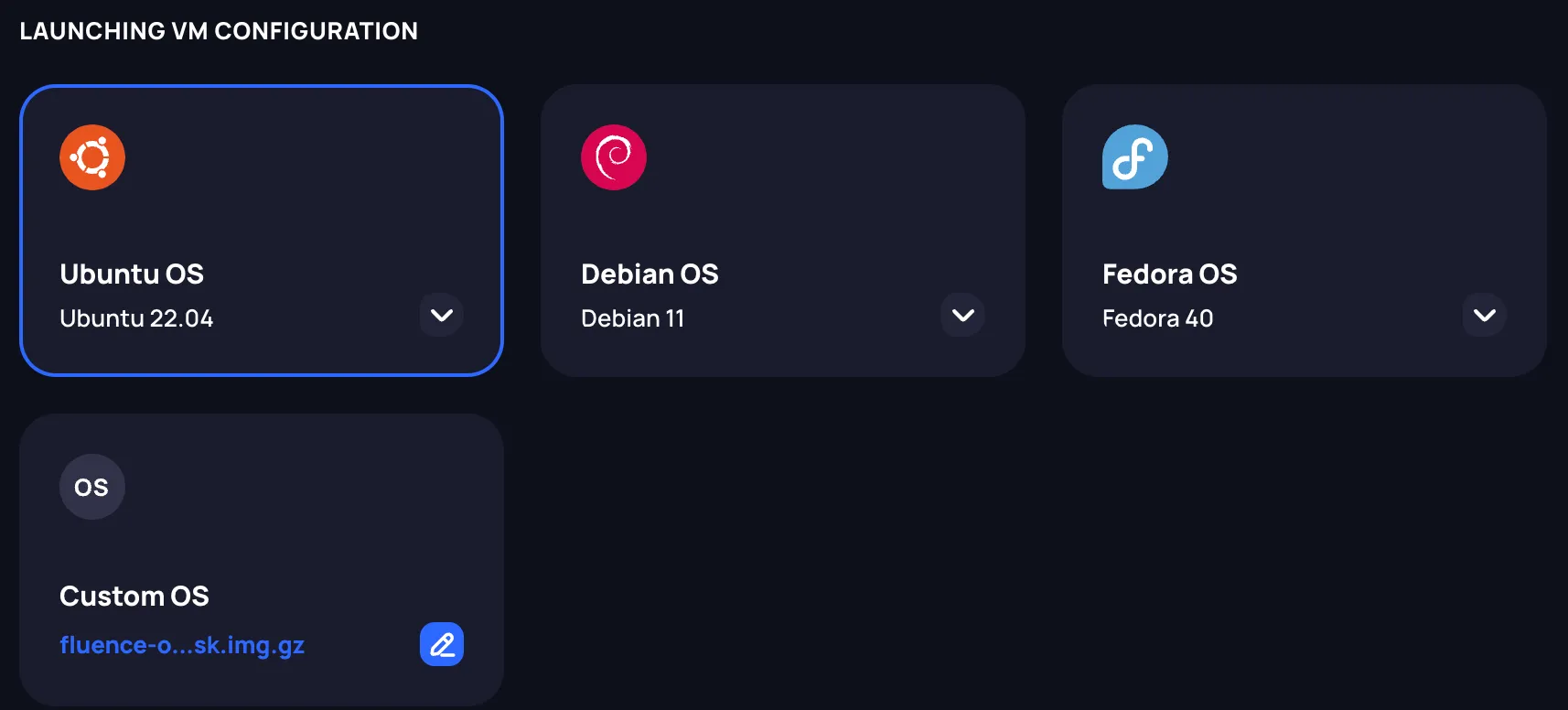
Choose an OS image for your instance. You can pick a pre-defined image or provide a link to a custom image. Custom images must be publicly downloadable and configured for remote instances — look for images tagged Generic Cloud or Cloud. See supported formats.
9. Provide the public SSH key
Provide at least one SSH public key to connect to your instance. Supported formats: RSA, ECDSA, and ED25519.

10. Review the summary
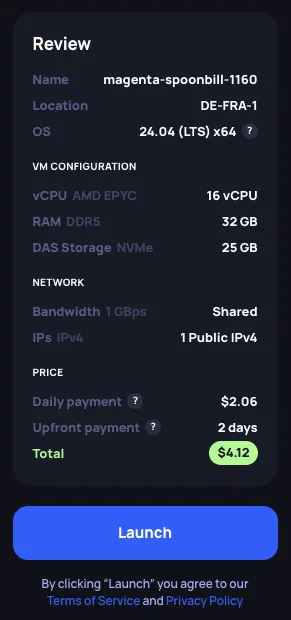
Review the instance summary and price in the Review section before launching.
11. Launch the instance
Click Launch to deploy. You'll be redirected to the Running Instances page.